
Resilience and Courage

Recent Content

The Only Life You Have

The Only Life You Have

Post

Kazuo Ishiguro writes about the lives we did not choose. Discover why accepting the life you are actually living is its own form of quiet courage.

Habit Over Inspiration

Habit Over Inspiration

Post

Octavia Butler knew inspiration is unreliable. Discover why the writers and creators who last are the ones who show up by habit, not by feeling.

The Hardest Thing to See

The Hardest Thing to See

Post

George Orwell believed clarity is an act of courage. Discover how seeing things plainly -- and saying so -- transforms both your thinking and your life.

Show, Don't Announce

Show, Don't Announce

Post

Anton Chekhov believed the most powerful writing never announces itself. Discover how showing instead of telling transforms the way you communicate and connect.

Beauty as the Last Rebellion

Beauty as the Last Rebellion

Post

Fyodor Dostoevsky believed beauty holds a redemptive power most of us overlook. Discover what he meant and how it applies to the way you move through the world.

See All Content
Terms and ConditionsDo Not Sell or Share My Personal InformationPrivacy PolicyPrivacy NoticeAccessibility NoticeUnsubscribe
Copyright © 2026 Inspirational Quotes

The Art of Failing Better

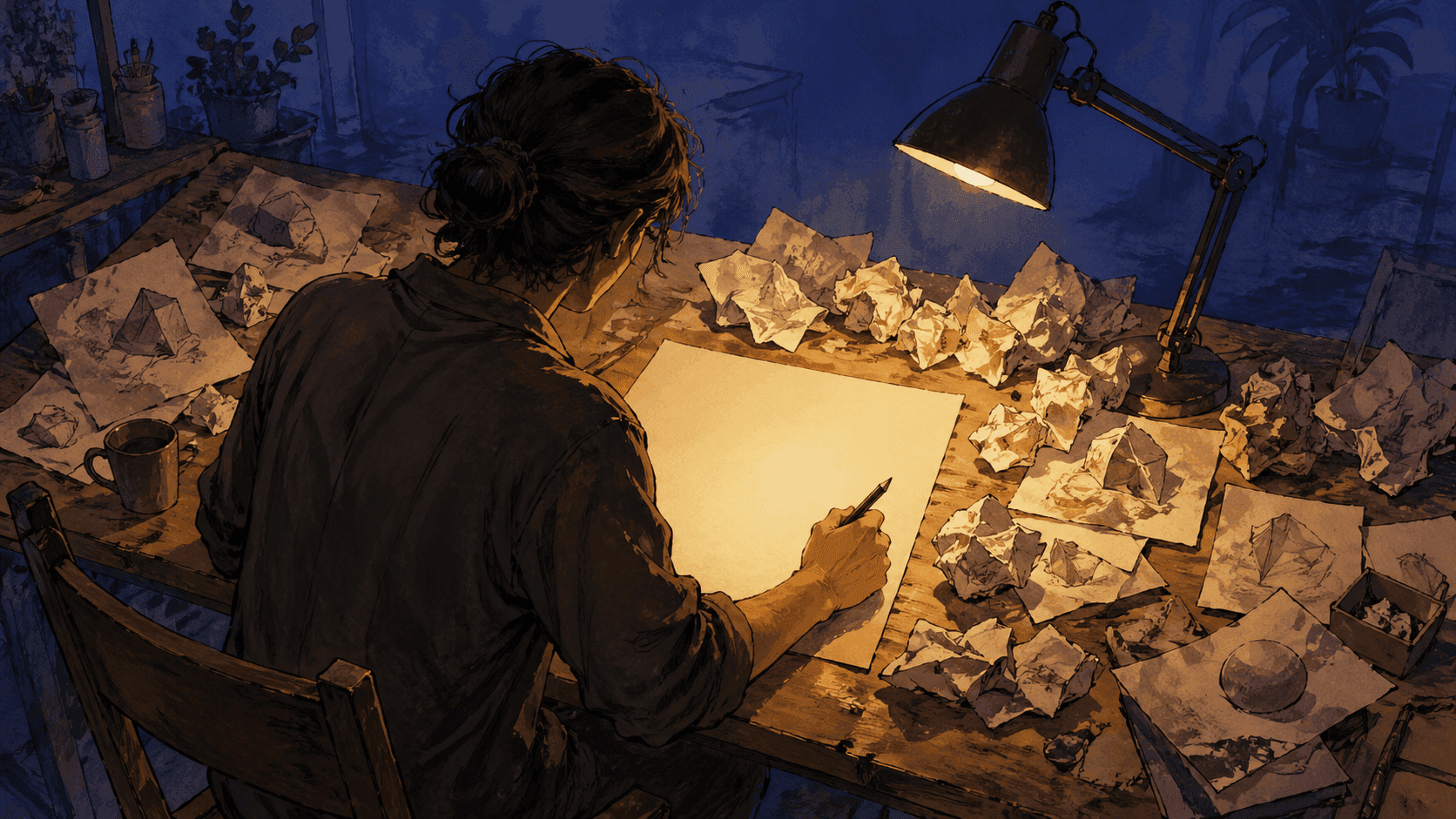
Inspirational image for quote

"Ever tried. Ever failed. No matter. Try again. Fail again. Fail better."

— Samuel Beckett

Samuel Beckett (1906–1989) was an Irish novelist, playwright, and poet who spent most of his adult life in Paris, writing in both English and French. He is best known for Waiting for Godot, a play that redefined what theater could be and do. Awarded the Nobel Prize in Literature in 1969 — he did not attend the ceremony — Beckett was a writer of radical minimalism who stripped language down to what could not be removed. His work is often described as bleak, but it is more accurately described as honest: a sustained inquiry into how people persist when there is no guarantee that persisting will matter.

RESILIENCE AND COURAGE
PERSISTENCE
GROWTH

Context

These lines come from Worstward Ho, a short prose piece Beckett published in 1983, six years before his death. The title is his own dark joke on a word that does not exist, and the text is one of the strangest and most demanding things he wrote. But this passage escapes its context and travels. "Fail better" is not motivational shorthand. It is a precise instruction: the goal is not to stop failing — failure is taken as given — but to fail with more information, more skill, less repetition of the same mistake. Beckett spent his life doing exactly this, revising relentlessly, publishing slowly, treating each failure as data. The four-word command at the end is what survived everything he cut.

Today's Mantra

Every failure teaches me something the next attempt will use.

Reflection Question

Think of a failure you have been avoiding revisiting. Are you staying away from it because it genuinely has nothing left to teach you, or because looking at it clearly feels like admitting something you would rather not admit? What would "failing better" at that same thing actually require of you?

Application Tip

Choose one recent failure — professional, creative, personal — and write a single-page debrief using three questions only: What did I try? What specifically did not work, and why? What would the next attempt do differently? Keep the debrief factual and short. Beckett's instruction is not to wallow; it is to extract. The goal is one usable piece of information you did not have before you failed. That is what "better" means.