
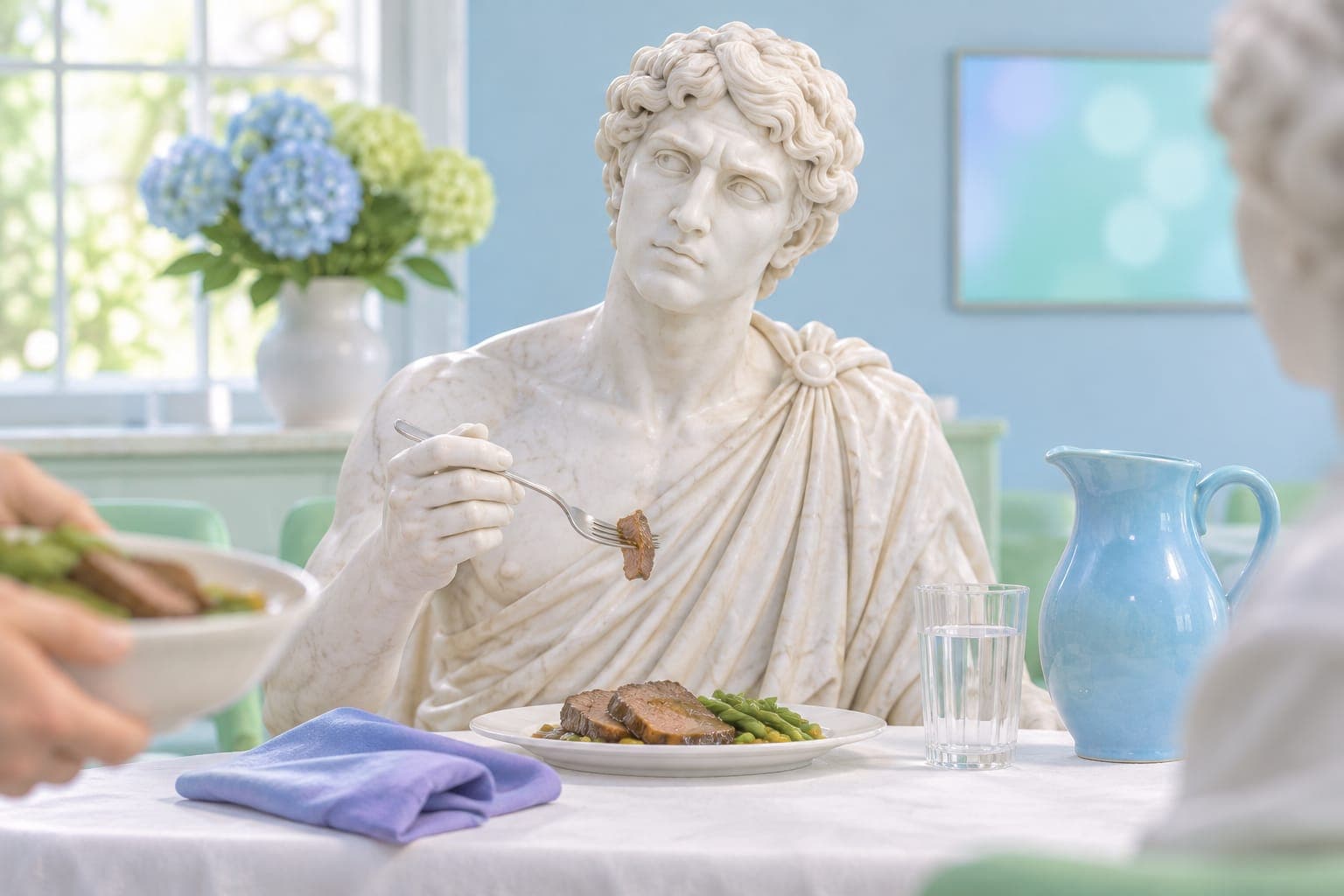
In Epictetus's Own Words
“Men are disturbed not by the things which happen, but by the opinions about the things.”
— Epictetus, Enchiridion, 5
In the Enchiridion, a short handbook of Epictetus's teaching compiled by his student Arrian, this line opens a larger point: events themselves do not trouble us, our judgments about them do. Even death, he says, is terrible only because we judge it so. The same logic applies to small things. A sigh, a pause, or a "hmm" is just a sound until we attach a story to it.
Who Was Epictetus?
Epictetus was born around AD 50 in Hierapolis and spent his youth enslaved in Rome. After gaining his freedom, he taught philosophy until Emperor Domitian banished philosophers from Rome, and then he opened a school in Nicopolis in Greece. He wrote nothing himself. His student Arrian recorded the Discourses and distilled them into the Enchiridion, a pocket handbook of Stoic practice. His central lesson, separating what is up to us from what is not, still shapes modern therapy and self-help.
Try This Today
The next time someone gives you a small, ambiguous reaction, like a sigh, a shrug, or a "hmm", stop before you interpret it. Say silently, that is a sound, not a verdict. Then either ask one friendly question or let it go. Notice how many minutes of your evening the story would have taken. Write that number on a sticky note and keep it handy.
Your Turn
What small gesture or sound from someone you love have you been reading as criticism, and what else could it honestly mean?
Letters are composites written by the Lifted Words editors. Replies are written in the spirit of each thinker; the quote in the blue box is their own.